shooting fundamentals blogs
7 Fundamentals of Marksmanship
Credits: The Range 702
Marksmanship is a precise skill that requires focus,
practice, and routine steps for safe and accurate shots.
Learning to handle a firearm properly and refining your
craft will help you become a safer, more precise gun
handler. Our certified firearms instructors share the
fundamentals of marksmanship and why each is important.
Instructor Helping Someone Learn How To Shoot
Gun Safety Comes First
Before you learn to shoot a gun, there are some critical
gun safety rules to follow every time you hold the
rifle. Whether you're heading to an indoor shooting
range or outdoor target practice, always keep these
basic safety measures in mind:
-
 Handle
all firearms as if they are loaded.
Handle
all firearms as if they are loaded.
Keep the gun unloaded until ready to use.
Don't point the gun at anything you don't intend to destroy.
Keep your finger off the trigger until ready to shoot.
Know your target and what is beyond your target.
Want a professional instructor to help you learn the basics of shooting? Register for a 1:1 training class for expert guidance!
The 7 Shooting
Fundamentals
If you're new to shooting, you'll be learning about the
seven fundamentals that make up a good shot. Each of
these elements should be followed for every attempt to
improve and maintain consistency. Here's what you need
to know:
1. Stance
Stance is the first fundamental for every shot. Stance
refers to the position of your feet and body in relation
to the target. All other shooting fundamentals are built
upon a steady position when firing. Different shots
require different stances, including:
Bullseye - For the bullseye shooter using only
one hand on the gun, the stance is at a 45-degree angle
to the target with the feet shoulder-width apart. The
thumb of the non-firing hand should anchor securely in
the pocket to prevent the free arm from swaying and
throwing your shot off-balance.
Weaver - This stance is for the action shooter
with both hands on the gun. The feet are at an angle to
the target, the strong arm is straight, and the weak arm
is bent. The weaver stance helps lock in the upper body
and provides tension in the pistol grip for better
recoil control.
Isosceles - The body is facing directly toward
the target in this stance. Both hands are on the gun,
and arms are straight out in front of the shooter. The
upper body leans slightly forward.
 2.
Grip
2.
Grip
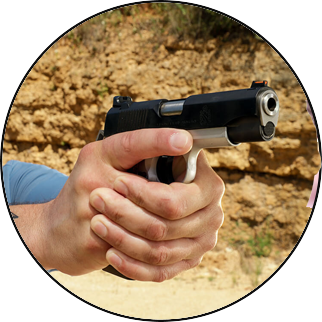
When it comes to grip, the most important thing to
remember is that you want to grip with enough strength
to prevent the pistol from moving during the shot but
relaxed enough so that your hand doesn't shake from the
pressure. Here are some tips for better gun grip:
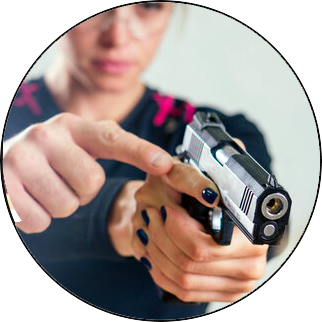
Make a "v" with your dominant hand; your thumb should be
on one side and all the other fingers on the other.
The gun is placed in the center of the v with the
middle, ring, and pinky fingers wrapped around the
pistol's grip.
Place the area between the joint and the tip of the
index finger pad on the trigger. Do not over insert the
finger; otherwise, it may cause the other fingers to
move and interfere with your shot when you squeeze the
trigger.
Firing A Gun With Correct Grip &Amp; Stance
3. Sight Alignment
Sight alignment refers to the process of lining up the
rear and front sights on the gun. For a well-aimed shot,
the shooter must pay attention to the rear sight
aperture and how it lines up with the front sight, with
most of the focus on the front sight post. The actual
target will appear blurry if done correctly as the
shooter's attention is focused on the front sight post.
Not all guns have sight-aligned requirements for
accuracy, such as red dot sights, which emit an
illuminated dot, or a prism sight where the sight places
target objects in a circle for aim. If there are no
sights to align, the shooter then focuses on a sight
picture to prepare the shot.
4. Sight Picture
Any shooter who wants a well-aimed shot must have the
correct sight picture1. The sight picture is the image
seen when the sights align with the target. This is true
for all types of sights when holding a rifle, handgun,
or any other firearm. Sight picture does not rely on the
natural ability to shoot. Instead, the shooter utilizes
a precise system to center objects in preparation for a
shot.
5. Breathing
In any type of shooting, breath control is extremely
important. In general, it's good to keep a calm, regular
breath throughout your preparation, aim, and fire. This
helps to:
Oxygenate the blood - Regular breathing adequately
oxygenates the blood, which sharpens vision and keeps
you alert.
Relaxes the nerves - Regular breaths help to relax the
muscles and nerves for optimal shots.
Steady movement - Prevent jerky movements and forced
breathing that can quickly mess up your shot.
The optimal moment to pull the trigger is when your
breathing cycle reaches a natural pause, like at the end
of an exhale. Your aiming breath should be calm and
consistent, and the ideal shot fits into your breathing
rhythm.
It's not a good idea to hold your breath in or force
your breath out. This can create unnecessary tension in
your chest muscles or make your body feel like it needs
to gasp for air. Working with your natural breathing
rhythm allows for a more relaxed shot with less tension
and movement in the body.
6. Trigger Control
Trigger control involves pressing the trigger to
complete the shot without upsetting your sight
alignment. There are two main issues when it comes to
proper trigger control:
Pulling - Pulling the gun is caused by placing too much
finger on the trigger, causing a hooked finger that
pulls the gun to the side when the shot is discharged.
This causes your shot to hit to the right of the target.
Pushing - Pushing is caused by too little finger in the
gun, which creates a side push of the trigger instead of
straight back, producing a shot that will be hitting
left of the target.
The ideal trigger control position allows for
independent movement of the index finger with trigger
contact on the finger's pad. This part of the finger is
most sensitive and allows for accurate control and
discharge of the gun.
7. Follow Through
Once you've discharged the gun, you want to be sure to
follow through with each shot. Follow-hrough is when you
end the shot by keeping the trigger finger fully
depressed until your gun has completed recoil and the
shooter's sights are back on the target. Once your
sights are back on target, then you can release the
trigger.
Follow-through is especially important when more than
one shot or sustained fire is the goal. With each
follow-through, focusing on trigger control, breath,
grip, and aim prevents the shooter from abandoning the
shot too early, as well as returning to a pre-firing
position to prepare for the next shot.
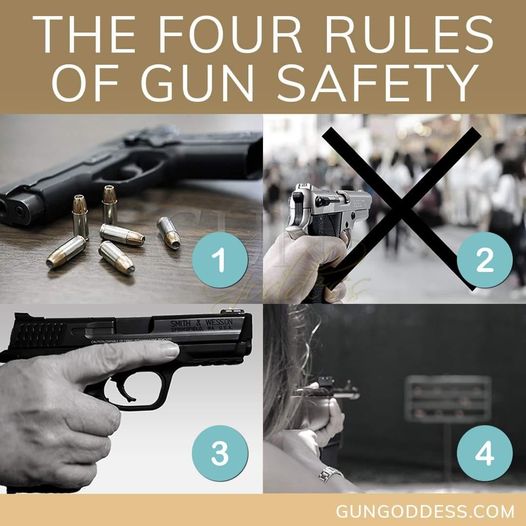
4 Rules for Gun
Safety...
1.Treat all firearms as if they are loaded.
2. Always maintain proper muzzle control.
3. Keep finger off the trigger until on target and ready
to shoot.
4. Know your target and what is beyond it.
CONCEALED CARRY FOR
WOMEN: WHERE SHOULD YOU START?
Credits:
gungoddess.com
The
number of women starting their concealed carry journey
is on the rise. According to a recent study, this year,
women are just over 29% of the carry permit holders in
the 15 states that report data by gender. That's a 28%
increase over 2021. Carry permit numbers also grew more
than 115% faster for women than for men.
With violent crime going up over the last year, you may
be thinking about carrying a gun for the first time in
your life. Making the decision to carry a firearm is a
big deal. It's not something to enter into lightly, as
the consequences of your decision can be life-changing..
If you're thinking about carrying a gun for
self-defense, there are several things you need to
consider before you start. It's not just about the
firearm--it's about you and your safety. You need to
decide whether or not concealed carry is right for you,
and if so, how best to do so safely.
If you're ready, it's important to plan your journey
carefully. This guide will help you understand what you
need to know about carrying concealed and how to move
through each part of the process. Here are the steps you
should take if you want to carry a gun for self-defense.
STEP 1: CONSIDER THE PERSONAL AND PRACTICAL
IMPLICATIONS OF CARRYING A FIREARM
Deciding to carry a gun doesn't start with running out
and buying a bunch of gear and a new gun, it starts with
sitting down with yourself and thinking through the
realities of being a concealed carrier. It's important
that you make this decision with a full understanding of
the potential implications, which include the
possibility of ending someone else's life..
Ask yourself these questions - are you proficient with a
firearm? Are you willing to take on the responsibility
of carrying around a gun all day? Would you be able to
harm someone who is trying to hurt you to protect
yourself and possibly your loved ones?
It can be stressful to think about these things, but
it's important to have this sorted out before you
actually start carrying. If the answer to any of these
questions is no, you may not be ready for concealed
carry.
STEP 2: KNOW THE LAW
Learn the concealed carry laws in your state, city, and
local area. About half of the US states require a permit
to carry, while the other half have enacted
"Constitutional Carry," which means no permit or
registration is required to carry a concealed firearm.
There's no consistency in gun laws from state to state,
so you need to study the laws in your immediate
location. You can find the most up-to-date information
at handgunlaws.us.
In addition to knowing your local and state laws, you'll
need to understand federal firearms laws. These laws
don't change as much as state laws, so you don't need to
study them as often. But it's still important to be
aware of federal firearms laws and know how they apply
to you and your situation.
STEP 3: DECIDE HOW YOU'RE GOING TO CARRY
The next step is to decide how you'll carry your
firearm. You can always change how and where you carry
down the road, but you'll need to start with a basic
plan. Your decision on how to carry your firearm should
be based on several factors. These include your
lifestyle, your body type, and the clothing you wear.
Choosing a carry style that is right for you will make
all the difference when it comes time to conceal a gun
under your clothes.
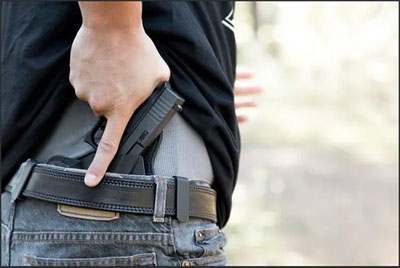
Your holster needs to be comfortable and easy to use,
but also be designed for your specific firearm. There
are two primary types to consider — on your body or off
body in a concealed carry purse. If you choose on-body
carry, decide if you want a traditional
inside-the-waistband holster or an alternative style
holster like a belly band, corset holster, or using
holster-integrated clothing like leggings designed for
concealedcarry. You'll then need to figure out where on
your body to place your holster and gun. You have a lot
of choices, so we recommend reading our guide to
understanding waistband positions.
STEP 4: CHOOSE THE RIGHT GUN
Now that you know where you'll carry, it's time to find
the right gun. Not all handguns are designed to be used
for concealed carry, so it's important to choose one
that will work well with the method of concealment
you've chosen.
The best way to choose a firearm is by getting your
hands on them. We recommend going to a range that rents
firearms and trying several out to see what feels best
to you. Once you've found the gun that feels right, make
your purchase.
STEP 5: GET PROPER CONCEALED CARRY TRAINING
The importance of training cannot be overstated. Even if
you have been shooting for years at the range, perhaps
even competing, there are skills specific to concealed
carry you need to learn. A good place to start is with a
concealed carry course. There are many of them
available, but we recommend taking one from a reputable
instructor in your area. These courses will not only
teach you about firearm safety and handling protocols
but also how to draw from concealment, proper trigger
management, and other tactics specific to concealed
carry.
STEP 6: PRACTICE CARRYING YOUR GUN
The next step is to practice carrying your gun. This is
something you can do by wearing your unloaded gun and
holster around the house (triple check before doing this
to make sure it's not loaded). This will help you get
used to the feel of having a firearm on your body and
how it affects your movements. You’ll also want to
practice drawing from concealment while wearing
different types of clothing so you can get used to how
it feels. We recommend using dry fire practice to speed
up the process, here's our guide to getting started with
dry fire..
Once you feel comfortable with your gun on your body,
you can start carrying it with you outside of the house.
Don't feel like you have to rush to start carrying —
take your time and get used to the feel of having your
gun on you before attempting to carry it in public.
STEP 7: WORK ON YOUR SHOOTING SKILLS
Regular live fire shooting practice is the only way to
improve your skills and make sure you're ready for a
real-world situation. Shooting skills will degrade
quickly if you don't practice them, so you need to head
out to the range frequently..
Training will also help you avoid being in a situation
where you have to think about what to do next, which can
be detrimental to your safety. When you're trained, your
body can simply react to the situation without having to
think about it first.
Overall, the decision to carry a concealed weapon is a
personal one. Anyone considering concealed carry (man or
woman) should carefully weigh the potential benefits and
risks. The decision to carry a concealed weapon is a
personal one, and it should be made after careful
consideration of all the pros and cons. Even if you
decide not to carry a concealed weapon, you can still
take steps to improve your personal safety, like working
on your situational awareness.
CONCEAL CARRY ETHICS
 Carrying a concealed weapon comes with the ethical
obligation to protect others in dangerous situations. In
situations where innocent lives are at risk, individuals
who are legally carrying a concealed weapon may have a
moral duty to intervene and use deadly force if
necessary.
Carrying a concealed weapon comes with the ethical
obligation to protect others in dangerous situations. In
situations where innocent lives are at risk, individuals
who are legally carrying a concealed weapon may have a
moral duty to intervene and use deadly force if
necessary.
Embracing Responsibility: The Ethical
Implications of Concealed Carry Weapon (CCW) Embracing
Responsibility: The Ethical Implications of Concealed
Carry Weapon (CCW)
Carrying a Concealed Weapon (CCW) is not just a legal
right; it's a profound ethical responsibility. In this blog, we delve into the ethical considerations every CCW
holder should contemplate to ensure they carry with
conscience and awareness.
Carrying a Concealed Weapon (CCW)
The Weight of Responsibility: Concealed Carry Weapon (CCW)
The decision to carry a concealed weapon comes with
significant moral weight. You hold the power to
potentially end a life in self-defense. Understanding
and respecting this power is crucial. Always remember
that a firearm is a tool of last resort, not a first
response.
The Role of Training in Ethical CCW
Effective training goes beyond handling and shooting
skills. It should also address the moral and ethical
aspects of CCW. Quality training programs, like those
offered by In Focus Training, often include discussions
on the judicious use of force and the legal and
emotional aftermath of a defensive shooting.
 The Role of Training in Ethical CCW
Situational Awareness: More Than Just Vigilance
Situational awareness in the context of Concealed Carry
Weapon (CCW) extends beyond being alert. It involves
understanding situations where de-escalation is
preferable to drawing your weapon. Avoiding a conflict
is often the most ethical choice, and awareness is key
in making these decisions.
Legal Awareness: A Pillar of Ethical CCW
Staying informed about CCW laws is not just a legal
necessity but an ethical one too. Knowing when and where
you can legally carry and use your firearm is
fundamental. Misunderstandings can lead to tragic
consequences, both legally and morally.
The Psychological Preparedness of CCW
Carrying a concealed weapon requires mental
preparedness. Being psychologically prepared means
understanding your own capabilities and limits. It
involves having a clear mindset about the gravity and
consequences of using your weapon.
The Impact of CCW on Society
As a Concealed Carry Weapon (CCW) holder, you're part of
a broader community. Your actions reflect on the entire
community of responsible gun owners. Upholding high
ethical standards helps improve public perception and
maintains the rights of CCW holders.
Continuous Reflection and Education
Ethical CCW is a journey, not a destination. Regularly
reflecting on your motivations, decisions, and
responsibilities is important. Continual education,
through advanced courses and staying abreast of
discussions in the CCW community, is crucial.
Conclusion: Concealed Carry
Weapon (CCW)
Carrying a concealed weapon ethically means more than
just following the law. It's about understanding the
profound responsibility you carry every day. By focusing
on training, awareness, legal knowledge, and continuous
self-reflection, you can ensure that your decision to
carry concealed is as responsible as it is right.
Remember, with great power comes great responsibility.
Carry wisely, carry ethically.